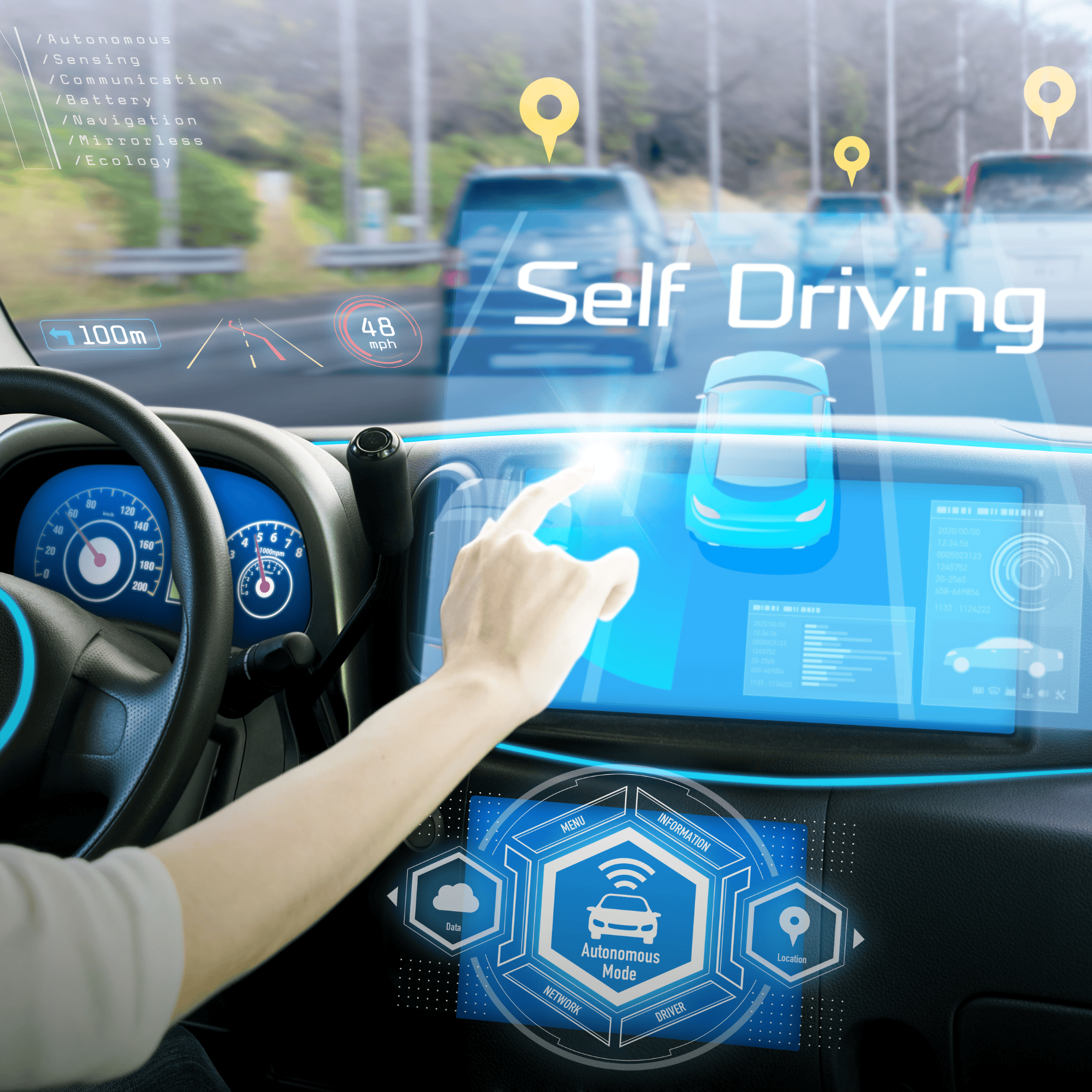
When the vehicle was driving itself at the moment of a crash, the legal questions change. The defendant is no longer the person behind the wheel. The defendant is the manufacturer, the software developer, the fleet operator, or some combination of all three.
The Illinois autonomous vehicle lawyers at Collins Law Group represent people seriously injured in crashes involving autonomous and semi-autonomous vehicles throughout the Chicago area and across the state.
These are among the most demanding cases in personal injury law. They turn on sensor data, software event logs, internal manufacturer testing records, and what the company knew about the system's limitations before it released the technology on public roads. They are won by a firm that has done the engineering work, retained the right experts, and shown it will take the manufacturer to verdict.
Modern vehicles sit on a spectrum. At one end, a car with adaptive cruise control and automatic emergency braking still has a human in primary control. At the other end, a Waymo robotaxi has no human in the vehicle at all. In between sit Tesla's Autopilot and Full Self-Driving, Mercedes Drive Pilot, GM Super Cruise, Ford BlueCruise, and dozens of other partial-automation systems that ask a driver to supervise software that is doing most of the actual driving.
When the system is the one making the decisions, the case is no longer about driver negligence in any traditional sense. It is about how the vehicle was programmed, what its sensors saw and how they were interpreted, what testing the manufacturer did before deployment, and what warnings were given to the driver and to the public. These questions overlap with our broader automotive defect practice and pull from the same product liability framework.
We work across four overlapping categories. Each requires a different combination of experts and a different theory of the case.
Software, sensor, and system failures are the technical core of every autonomous vehicle case. The patterns we see include:
Each of these is a product liability question. It turns on whether a safer reasonable alternative design existed, whether the manufacturer chose the cheaper or more marketable option over the safer one, and what the company knew about the failure mode before the crash that injured our client.
Partial-automation systems sit in the most contested legal space in vehicle technology. Tesla's Autopilot and Full Self-Driving, GM Super Cruise, Ford BlueCruise, and Mercedes Drive Pilot all rely on a driver to supervise software that does most of the driving. When the system fails, the question becomes who should bear the responsibility: the driver who was told the system was safe enough to rely on, or the manufacturer that built and marketed the system. In August 2025, a federal jury in the Southern District of Florida answered that question against Tesla in the Benavides case, awarding $243 million, including $200 million in punitive damages, after finding the Autopilot system partly responsible for a fatal crash. The verdict was upheld on post-trial motions in February 2026. It was the first federal jury verdict on a fatal Autopilot crash, and it is a marker of how these cases can resolve when a firm is willing to take the manufacturer through trial.
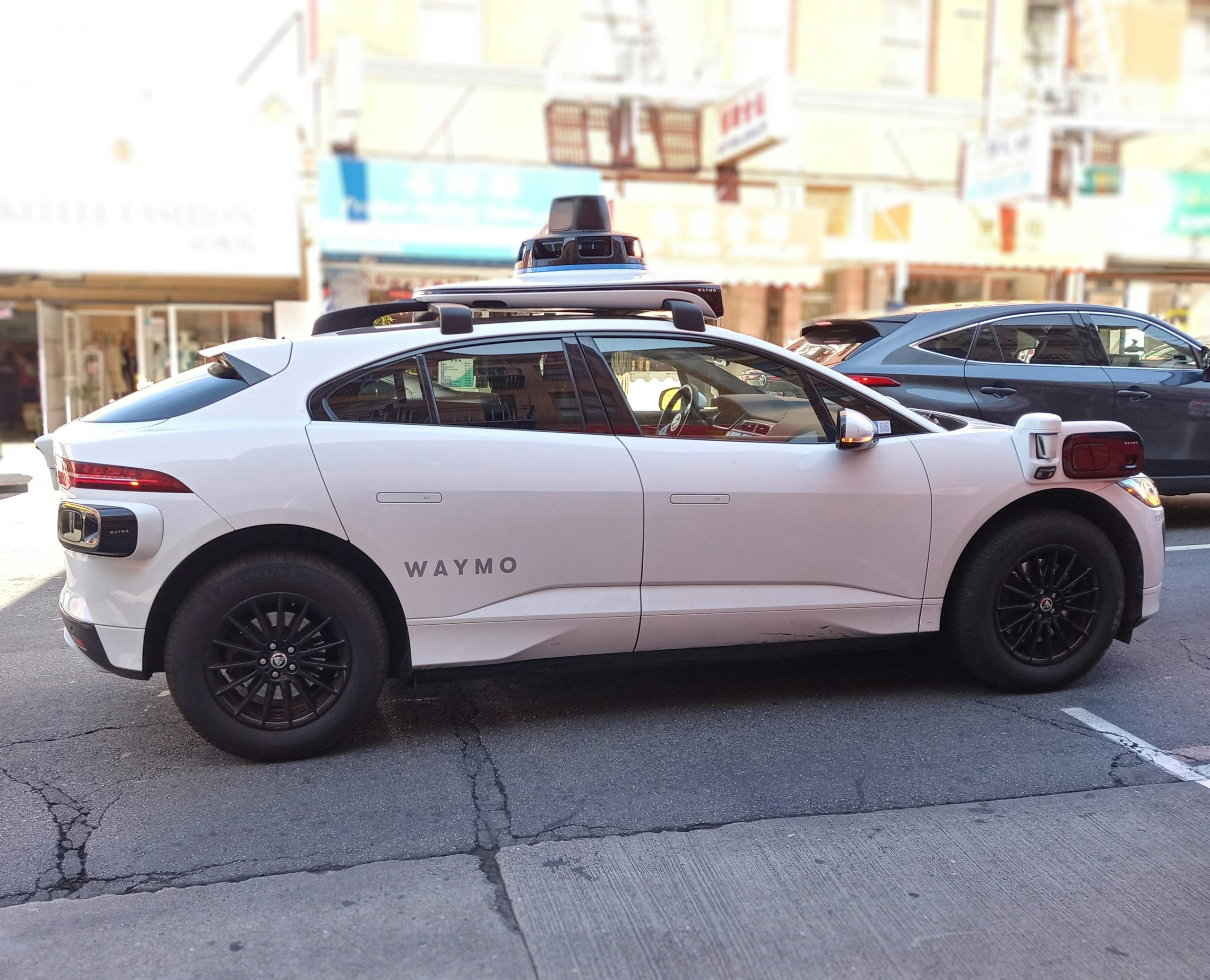
Waymo operates commercial robotaxi service in roughly ten U.S. cities and has reported more than 100 million autonomous miles. The pace of deployment has been matched by a growing record of incidents. NHTSA's Standing General Order crash reporting data shows more than 1,400 crash reports involving Waymo vehicles between July 2021 and November 2025, with 117 reported injuries and two fatalities. Many of those incidents involved a Waymo as the struck or stopped vehicle rather than as the cause, but the count continues to rise as the fleet expands. In January 2026, a Waymo robotaxi struck a child pedestrian outside Grant Elementary School in Santa Monica during morning drop-off, prompting preliminary investigations by both NHTSA and the National Transportation Safety Board. The NTSB is separately investigating approximately nineteen incidents in which Waymo robotaxis illegally passed stopped school buses in Austin, Texas, during the 2025-2026 school year, after a similar problem was first reported in Atlanta. A driverless Waymo vehicle also struck a bicyclist in San Francisco in February 2024. In May 2026, the company recalled approximately 3,800 vehicles over a software defect that allowed them to drive into flooded roadways, and paused freeway service around the same time over safety concerns.
Cruise, the GM-backed competitor, dragged a pedestrian in San Francisco in 2023 and was substantially wound down by GM in 2024 in the aftermath of that incident. When a robotaxi causes injury, the case sits squarely against the manufacturer and the operator. The driver has been removed from the equation by design.
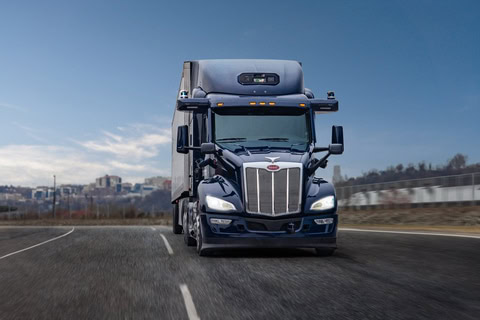
In May 2025, Aurora became the first company to remove safety drivers from a Level 4 autonomous truck operation, running freight between Dallas and Houston. The pace of deployment since has been rapid. By early 2026, Aurora had expanded to a network of ten routes and reported 250,000 driverless miles on public roads. In May 2026, the company and McLane Company, a Berkshire Hathaway subsidiary, launched driverless refrigerated freight runs between Dallas and Houston, with plans to expand to McLane distribution centers across the Sun Belt by the end of 2026. Aurora has separately partnered with Volvo Autonomous Solutions on a Dallas to Oklahoma City route and projects more than 200 driverless trucks in operation by year end, scaling to over 1,000 the following year.
Other developers are moving at similar speed. Kodiak Robotics, now publicly traded on the Nasdaq as Kodiak AI, is operating ten driverless trucks commercially for Atlas Energy Solutions in the Permian Basin and has reported more than three million autonomous miles. A partnership with Bosch announced at CES 2026 is designed to scale factory production of the autonomous hardware platform, and Kodiak has stated plans to launch long-haul driverless service in the second half of 2026. Waabi, the Toronto-based autonomous trucking company, raised approximately $1 billion in January 2026 in a round that included Uber, Khosla Ventures, NVIDIA, Volvo Group, and Porsche, and is integrating its driver into factory-built Volvo trucks. Einride and EASE Logistics, working with the Ohio Department of Transportation, deployed Level 4 autonomous electric trucks on the Ohio Truck Automation Corridor in May 2026.
When an 80,000-pound autonomous tractor-trailer is involved in a crash, the case combines product liability against the technology developer with the federal trucking regulation framework that already governs commercial motor vehicles. The defendants typically include the technology developer, the truck manufacturer, the motor carrier operating the vehicle, and in some cases the shipper whose freight is being moved. We handle the full combination as part of our Illinois truck accident attorney practice.
The legal framework for autonomous vehicle liability is being written in real time, in courtrooms and at NHTSA, while these vehicles are already on public roads. Three developments stand out as of this writing:
We track these developments closely because they directly affect how we evaluate, prepare, and try every case in this practice.
The central facts in an autonomous vehicle case come from sources that do not exist in a traditional crash:
Securing this evidence quickly, and securing it before a routine software update overwrites it, is one of the first things a serious lawyer in this space has to do. If you or someone in your family was injured in a crash involving an autonomous or semi-autonomous vehicle, the vehicle itself, its data, and its software state are all evidence. Do not allow the vehicle to be repaired, sold, or updated until a lawyer has had a chance to preserve them.
The list of potential defendants in an autonomous vehicle case generally includes:
These cases routinely involve multiple defendants and multiple insurance policies. Our job is to identify each one and to pursue each to the extent of the full harm.
Illinois imposes strict deadlines on personal injury and wrongful death claims, and missing those deadlines is almost always fatal to the case. In most personal injury matters under Illinois law, the statute of limitations is two years from the date of injury. Product liability claims may also be subject to a statute of repose. The deadlines are different for cases involving minors, and for cases in which the defect was not reasonably discoverable until later. This "discovery rule" rarely applies to automotive product defect cases, however.
Because these deadlines are unforgiving, and because the vehicle and its software state are critical evidence that should be preserved before any update or repair, you should speak with an Illinois autonomous vehicle lawyer as soon as possible after the crash.
The industry uses a six-level scale from no automation to full automation. Most cases we handle involve Level 2 partial-automation systems, like Tesla Autopilot and Full Self-Driving, GM Super Cruise, and Ford BlueCruise, where a driver is still required to supervise. We also handle Level 4 cases, where there is no driver at all, such as Waymo robotaxis and the new generation of autonomous freight trucks.
Liability typically falls on the manufacturer, the software developer, and the fleet operator, and may also reach the supplier of any specific sensor or component that failed. In partial-automation cases, the human driver may also bear some responsibility depending on what the system was doing and what the driver was told it could do. The recent federal jury verdict against Tesla in the Benavides case shows that a manufacturer can be held substantially responsible even when a driver is admittedly distracted.
Sensor data, software event logs, manufacturer testing records, disengagement logs, and over-the-air software update records. None of this is the kind of evidence anyone collects at a traditional crash scene, and most of it is controlled by the manufacturer, which means securing it requires fast preservation requests and, in many cases, court intervention.
Yes. Software updates can overwrite the system state that was running at the time of the crash, which is often the most important piece of evidence in the case. Disable connectivity if you can, or speak to a lawyer immediately so a formal preservation request can go out to the manufacturer.
Our personal injury and product cases are handled on a contingency basis. There is no fee unless we recover for you.
Longer than ordinary motor vehicle cases. Discovery is more involved, experts are required, and manufacturers defend these matters aggressively. A case may take from eighteen months to several years to resolve, depending on its complexity and the defendants involved.
If you or someone in your family was seriously injured in a crash involving an autonomous or semi-autonomous vehicle, the vehicle, its sensors, and its software state are all evidence and should be preserved before any update or repair. Our personal injury and product cases are handled on a contingency basis. There is no fee unless we recover for you.
Contact Collins Law Group"*" indicates required fields