When a vehicle's design or one of its components fails, the consequences are not measured in fender benders. They are measured in spinal cord injury, traumatic brain injury, severe burns, and wrongful death. The Illinois automotive defect lawyers at Collins Law Group build their practice around cases in which the manufacturer, and not the other driver, is responsible for the harm. We handle these matters throughout the Chicago area and across the state.
These are among the most demanding cases in personal injury law. They are won with engineering experts, vehicle inspection, crash reconstruction, and a firm prepared to take the case all the way to verdict, as part of our broader defective products practice.
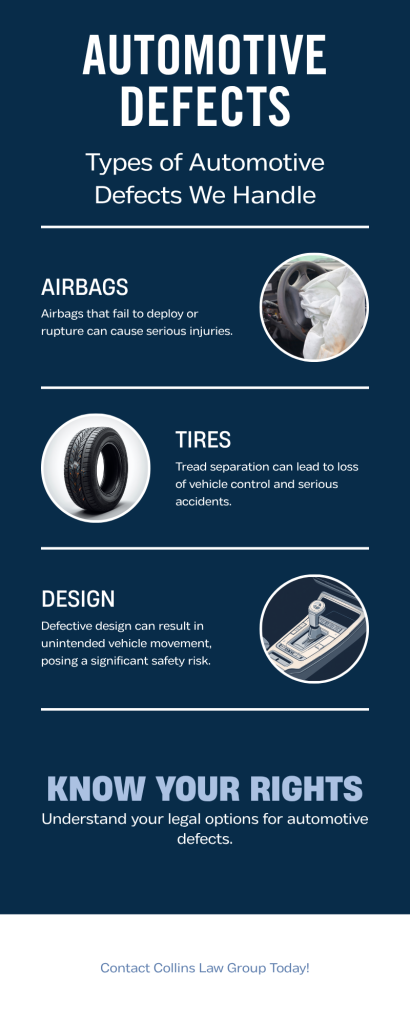
Most car crash cases turn on driver error. Automotive product defect cases are different. They arise when a vehicle's design or a defective component causes the crash, or when the crash should have been survivable but the car failed to protect the people inside it. In these cases, the defendant is the manufacturer that designed and built the vehicle, the supplier that produced the component, and sometimes both.
These are among the most demanding cases in personal injury law. They are won with engineering experts, vehicle inspection, crash reconstruction, and a firm prepared to take the manufacturer to verdict.
Several specific defect categories appear repeatedly in catastrophic injury cases. Each requires a different technical approach and a different category of expert.
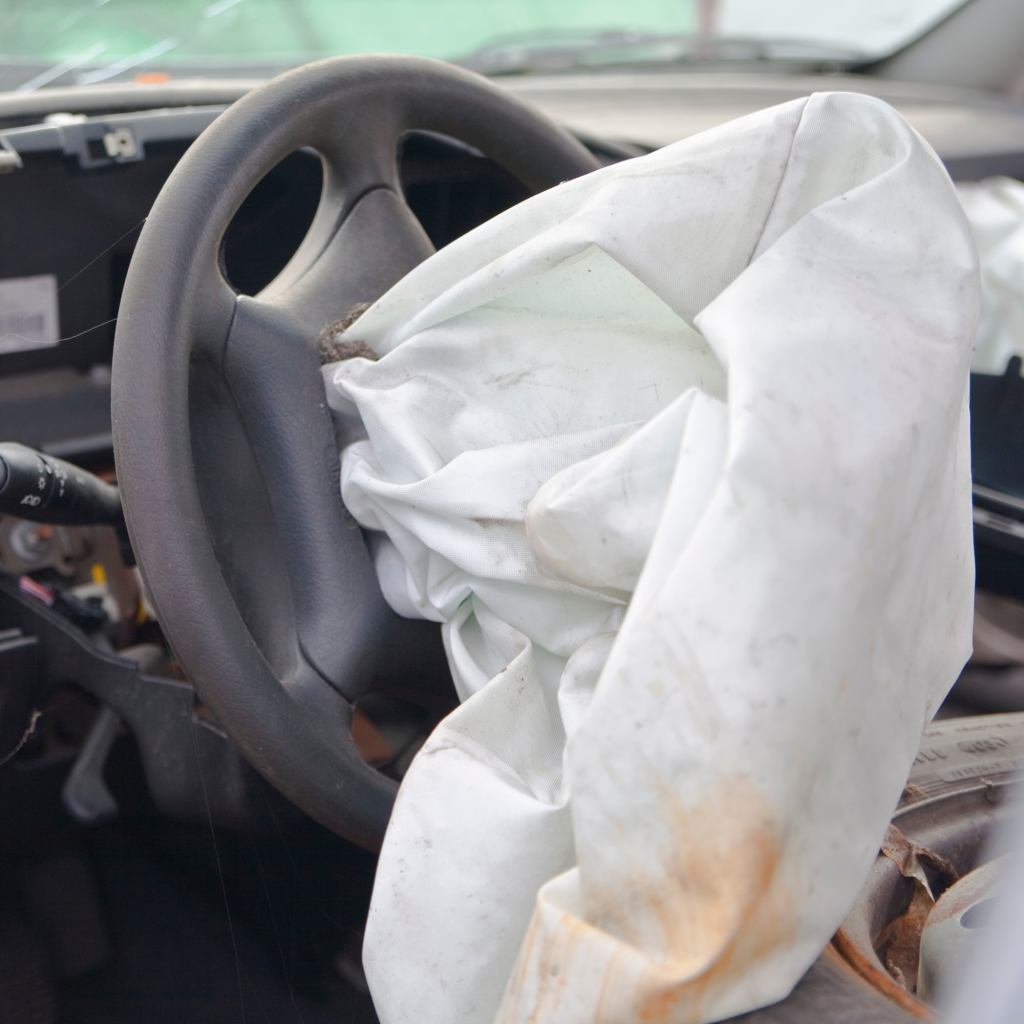
An airbag is supposed to protect occupants in the fraction of a second a crash allows. When it fails, the consequences are severe. We investigate airbag cases involving:
If you are uncertain whether your vehicle is subject to an open airbag recall, you can confirm it through the NHTSA recall database.
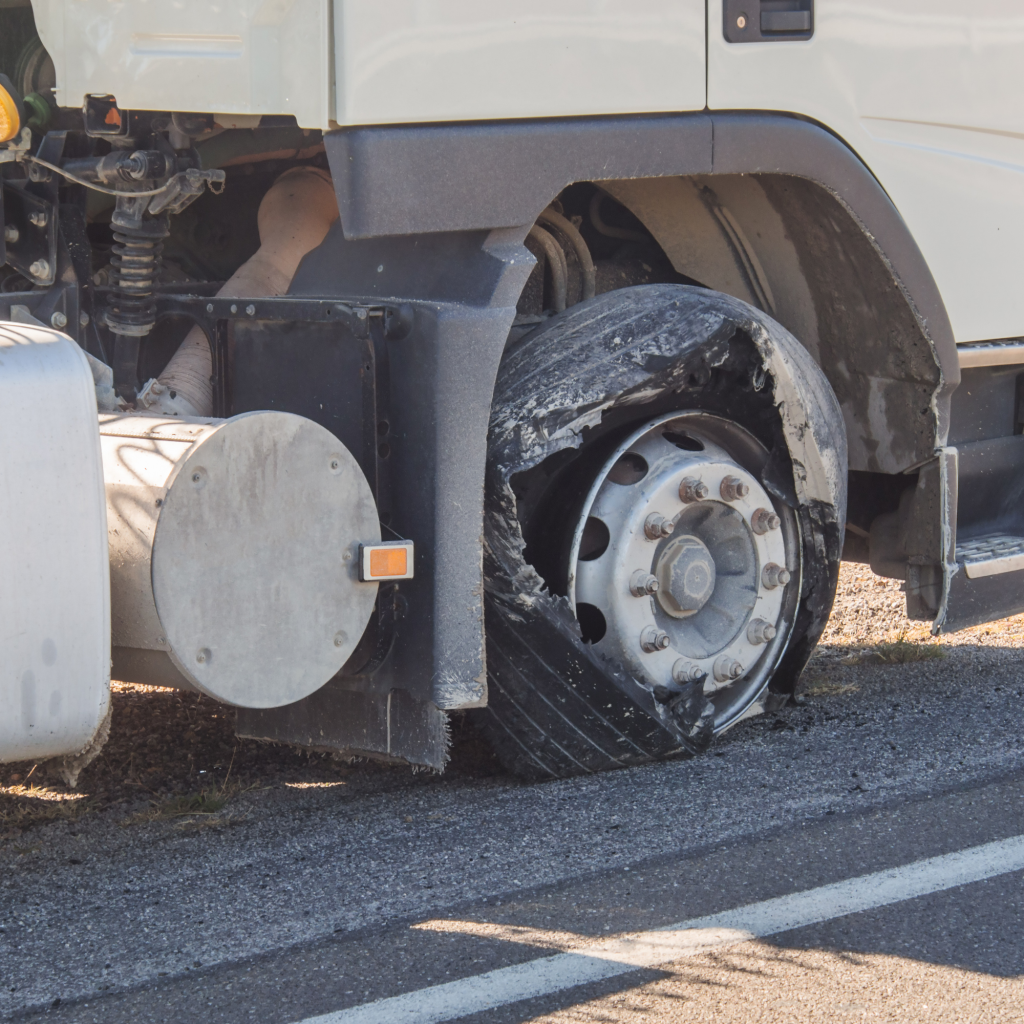
A tire that comes apart at highway speed can cause a driver to lose control and roll the vehicle. These failures are often traceable to a manufacturing or design defect, to degraded or aged tires sold as new, or to inadequate warnings about load limits and rotation. Certain spare tires and run-flat designs have also shown patterns of failure that suggest a design problem rather than driver misuse.
We work with tire-failure experts to determine whether the tire, and not the driver, caused the loss of control. Commercial vehicle tires, including those on tractor-trailers and box trucks, raise their own set of issues that overlap with our Illinois truck accident lawyer practice.
Some defects are built into the design itself. Two of the most consequential categories are rollaway cases and unintended vehicle movement cases.
Rollaway cases involve vehicles that move when the driver reasonably believes they are secure. Electronic and push-button gear selectors, automated park and hold features, and ambiguous shifter designs that do not give the driver clear, reliable confirmation that the vehicle is in park have all produced the same outcome: the driver steps out, the vehicle rolls, and someone is struck. The victim is often the driver, pinned between the vehicle and an open door, a garage wall, or a fence. Children left in cars and bystanders standing nearby have also been killed and severely injured by rollaway events. Brake-shift interlock failures, park-lock mechanism failures, and software faults in modern transmission designs round out the technical causes.
Unintended vehicle movement cases involve a vehicle that moves on its own without the driver commanding it. Sudden unintended acceleration from a stopped position, lurching during gear changes, and electronic throttle or transmission control faults that cause the vehicle to surge are the common patterns. These cases often hinge on what the vehicle's electronic data shows about pedal inputs, software state, and sensor readings in the seconds before the incident.
These cases turn on whether a safer reasonable alternative design existed and whether the manufacturer chose the cheaper or more marketable option over the safer one.
Crashworthiness is the vehicle's obligation to protect occupants in a foreseeable crash. When the structure or restraint system fails, ordinary injuries become catastrophic ones. We handle crashworthiness cases involving:
Independent crash testing by the Insurance Institute for Highway Safety measures many of these same structural and restraint protections. The gap between how a vehicle should have performed and how it actually performed is often where these cases are won.

Modern vehicles increasingly steer, brake, and accelerate on their own. The defects in this category fall along a spectrum. At the lower end, partial driver-assistance features like automatic emergency braking, lane-keeping assist, blind-spot monitoring, and adaptive cruise control are now standard on many new vehicles. When these systems fail to engage, engage at the wrong time, or misread the road, the manufacturer and the software supplier may be responsible for the crash. These cases often turn on whether the system was marketed as safer than it actually performed.
At the higher end, fully autonomous and semi-autonomous vehicles raise a distinct set of liability questions. Robotaxi services like Waymo and Cruise put no human behind the wheel. Tesla's Full Self-Driving option puts a driver in the seat but invites them to delegate. Autonomous and semi-autonomous commercial vehicles, including long-haul trucks and last-mile delivery vehicles, raise the same questions with the added complexity of fleet liability and federal trucking regulation. When one of these vehicles strikes a pedestrian, runs a red light, or rear-ends another car, the case is no longer about driver negligence in any traditional sense. It is about how the vehicle was programmed, what its sensors saw and how they were interpreted, what testing the manufacturer did before public deployment, and what warnings were given to the driver and to the public.
The evidence in these cases looks different. Instead of skid marks and witness statements, the central facts come from sensor logs, camera footage, software event records, and the manufacturer's internal data on how the system performs in similar scenarios. Securing that data, and securing it before it is overwritten in a routine software update, is one of the first things a lawyer in this space has to do. The legal framework for autonomous vehicle liability is still developing, and several high-profile cases against major manufacturers are reshaping it in real time. Our autonomous vehicle page discusses these issues in greater depth.
Federal Motor Vehicle Safety Standards set minimum requirements for roof strength, seatbelt anchorage, airbag deployment, fuel-system integrity, and a range of other vehicle systems. When a manufacturer's vehicle falls short of one of these standards, that gap is powerful evidence in a defect case. The manufacturer's recall history, internal testing data, and patterns of consumer complaints reported to NHTSA can also establish that the company knew about the defect long before it acted.
Recall information matters for two reasons. An open recall on the vehicle that injured you is direct evidence of a known defect. The absence of a recall, however, does not mean the vehicle was safe. Many serious defects have been litigated to verdict before the manufacturer ever issued a recall, and several large recalls have been issued only after lawsuits forced the issue.
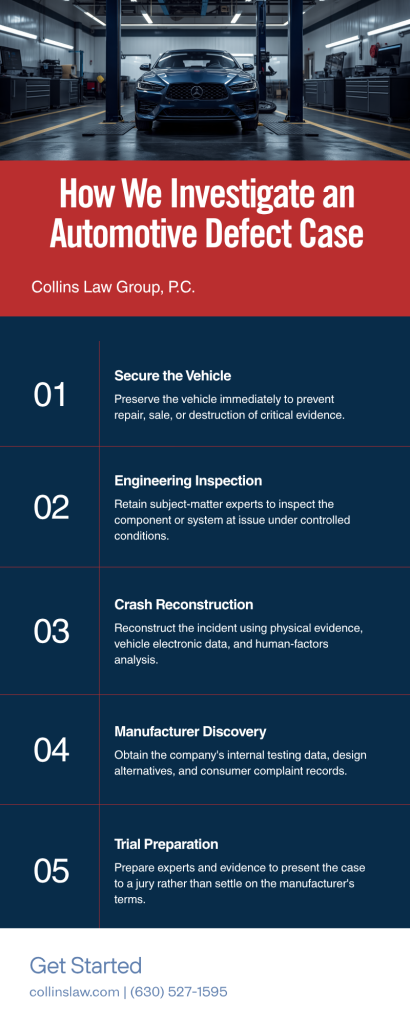
Automakers and their suppliers defend product cases with significant resources and experienced trial counsel. They do not improve their offers because a plaintiff asks. They respond to a firm that has done the engineering work, retained the right experts, and shown that it will put the case in front of a jury. Our investigation process generally moves through five stages.
Illinois imposes strict deadlines on personal injury and wrongful death claims, and missing those deadlines is almost always fatal to the case. In most personal injury matters under Illinois law, the statute of limitations is two years from the date of injury. Product liability claims may also be subject to a statute of repose. The deadlines are different for cases involving minors, and for cases in which the defect was not reasonably discoverable until later.
Because these deadlines are unforgiving, and because the vehicle itself is critical evidence that should be preserved immediately, you should speak with an Illinois automotive defect lawyer as soon as possible after the crash.
A regular car accident case is brought against the at-fault driver under ordinary negligence principles. An automotive defect case is brought against the manufacturer of the vehicle or one of its components under product liability law. The two can overlap, particularly in serious crashes where another driver was at fault and the vehicle also failed to protect its occupants.
You usually do not know with certainty at the start. What you know is that the injuries were severe or the crash dynamics were unusual. The investigation, including an engineering inspection of the vehicle, is what determines whether a defect contributed. That is why preserving the vehicle is so important.
Our personal injury and product cases are handled on a contingency basis. There is no fee unless we recover for you.
Automotive product cases generally take longer than ordinary motor vehicle cases. Discovery is more involved, experts are required, and manufacturers defend these matters aggressively. A case may take eighteen months to several years to resolve, depending on its complexity.
Yes. The vehicle is evidence. Do not allow it to be repaired, sold, salvaged, or destroyed until you have spoken with an attorney.
If you or someone in your family was seriously injured and you believe a vehicle or one of its components may have failed, the vehicle itself is evidence and should be preserved. Our personal injury and product cases are handled on a contingency basis. There is no fee unless we recover for you.
Contact Collins Law Group"*" indicates required fields