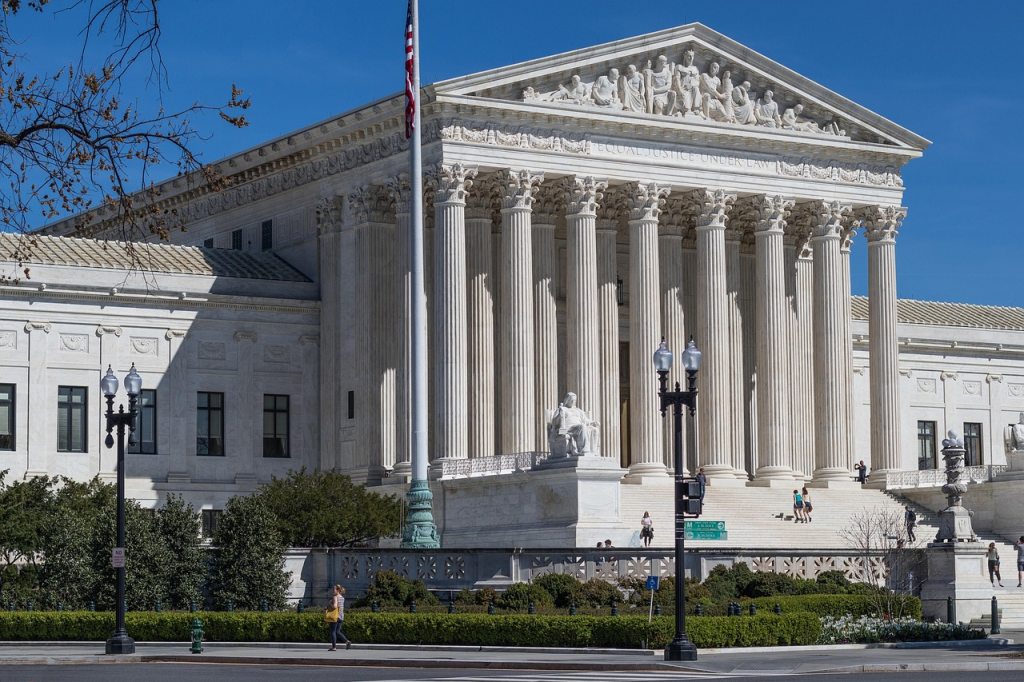
Yesterday, the United States Supreme Court handed down one of the most significant trucking liability decisions in decades. The ruling in Montgomery v. Caribe Transport II, LLC, No. 24-1238 is a 9-0 decision that reshapes how injured victims can pursue compensation after a catastrophic commercial truck crash. If you or someone you love has been seriously hurt in a truck accident anywhere in Illinois, this ruling matters to you.
In 2017, Shawn Montgomery was stopped on the side of an Illinois highway when a Mack truck driven by Yosniel Varela-Mojena veered into him. Montgomery lost his leg. He sustained severe and permanent injuries.
Varela-Mojena was hauling freight for Caribe Transport II, LLC, a motor carrier with a "conditional" safety rating from the Federal Motor Carrier Safety Administration (FMCSA), meaning it had documented safety deficiencies. The shipment had been coordinated by C.H. Robinson Worldwide, Inc., one of the largest freight brokers in the country.
Montgomery sued the driver, the trucking company, and C.H. Robinson. His claim against C.H. Robinson was straightforward: the broker knew or should have known that Caribe Transport was unsafe, and hiring it created an unreasonable risk of injury to people on the road. That is a classic negligent hiring claim.
C.H. Robinson's defense was not that it acted reasonably. Its defense was that federal law made the claim illegal to bring at all.
For decades, freight brokers have wielded a federal statute called the Federal Aviation Administration Authorization Act (FAAAA) as a near-total shield against personal injury lawsuits. The FAAAA preempts state laws related to the prices, routes, and services of the trucking industry. Brokers argued that state tort claims, including negligent hiring, fell within that preemption.
Courts, including the Seventh Circuit here, agreed. Injured victims were left with no recourse against the brokers who put dangerous carriers on the road.
That argument is over.
Writing for a unanimous Court, Justice Amy Coney Barrett held that a negligent hiring claim against a freight broker is not preempted by the FAAAA. The safety exception in 49 U.S.C. §14501(c)(2)(A) preserves state authority to regulate safety "with respect to motor vehicles," and a claim requiring a broker to exercise ordinary care in selecting a carrier squarely concerns the motor vehicles those carriers put on public roads.
The Court reversed the Seventh Circuit and remanded for further proceedings. Read the full opinion here.
Justice Kavanaugh filed a concurrence joined by Justice Alito, citing roughly 5,000 deaths and 114,000 injuries annually in truck-related crashes. He described broker accountability as "a matter of life and death."
He is right.
Trucking companies that cause catastrophic crashes often carry insufficient insurance to fully compensate seriously injured victims. Federal minimum liability coverage for commercial carriers is shockingly low relative to the life-altering injuries that a fully loaded semi can cause. When the motor carrier's policy limits do not cover the full scope of someone's damages, victims have historically had nowhere else to turn.
Freight brokers are a different story. Companies like C.H. Robinson generate billions of dollars in revenue every year by connecting shippers with carriers. They have access to FMCSA safety data. They know which carriers have conditional ratings, which have histories of hours-of-service violations, which have failed vehicle inspections. They make money every time they select a carrier for a load. And when they select a dangerous carrier, they should be held responsible for what happens next.
Montgomery opens the courthouse door to that accountability.
The crash in Montgomery happened in Illinois. The case was litigated through the Northern District of Illinois and the Seventh Circuit, which is the federal appellate court covering Illinois, Indiana, and Wisconsin.
For trucking crash cases in Illinois, here is what changes immediately:
Broker liability is now a live theory. Defense counsel can no longer file a motion to dismiss or for summary judgment on federal preemption grounds and expect to win. The fight moves to the merits: Was the broker's carrier selection reasonable? What did the broker know, and when did it know it? What did it fail to check?
Discovery against brokers becomes critical. How does C.H. Robinson, Echo Global, Coyote Logistics, or any other broker vet the carriers it selects? What data sources does it consult? What internal standards govern carrier selection? What safety flags did it ignore? These are now fair game in litigation.
Damages exposure is real and significant. Major freight brokers carry substantial insurance. For victims with catastrophic injuries, traumatic brain injuries, spinal cord injuries, or amputations like Shawn Montgomery's, broker liability can mean the difference between a policy-limits settlement with an under-insured carrier and full compensation.
If you have been seriously injured in a truck accident in Illinois, you need an attorney who understands how to investigate broker involvement, pull FMCSA carrier data, and build a negligent hiring case. This ruling does not win cases automatically. It opens the door. The work is in walking through it.
At Collins Law Group, P.C., we handle serious trucking and commercial vehicle crash cases across Illinois. Our practice focuses on catastrophic injury and wrongful death claims, and we understand the specific federal regulations, data sources, and litigation strategies that trucking cases require.
We investigate FMCSA safety ratings and violation histories. We depose dispatchers, safety directors, and broker representatives. We work with accident reconstruction experts and industry consultants who understand how freight is brokered, how carriers are selected, and where the system breaks down. We know what a conditional safety rating means and how to explain it to a jury in Will County, Cook County, or anywhere else in Illinois.
If you have been hurt in a truck accident and you are wondering whether a freight broker might share responsibility for what happened to you, contact us for a free consultation. There is no fee unless we recover for you.
The Supreme Court ruled 9-0 that freight brokers can be held liable under state negligent hiring law when they put dangerous carriers on the road. The FAAAA preemption defense is dead. Victims of commercial truck crashes in Illinois now have a meaningful legal path to hold every responsible party accountable, not just the driver and the carrier, but the broker who selected them.
Shawn Montgomery lost his leg on an Illinois highway because someone with a safety data subscription and a profit motive chose the wrong company for the job. The Supreme Court said that person can be held to account.
That is the right outcome.
John Risvold is a trial attorney and equity partner at Collins Law Group, P.C. in Naperville, Illinois. He focuses on catastrophic personal injury and wrongful death cases involving commercial trucking accidents, rideshare liability, automotive product liability, and brain and spine injuries. He can be reached at jrisvold@collinslaw.com.
Collins Law Group, P.C. | Naperville, Illinois | collinslaw.com
Related Resources: